Automated Pentesting with Entropy AI

Increase testing coverage while reducing the effort.

explore what entropy ai can do for you

Firmware, binaries, container images and complex software stacks continue to grow in size and complexity. At the same time, security teams face growing backlogs, limited specialist resources and increasing pressure to validate risks before release.

Entropy AI automates large parts of the pentesting process. The platform analyzes available artifacts, identifies exploitable vulnerabilities and validates findings before they are reported. The result is actionable security evidence that can be used by product security, cybersecurity engineering and development teams.

The challenge

MORE SOFTWARE. MORE ATTACK SURFACE. LESS TIME FOR VERIFICATION.

Many organizations face the same bottlenecks:

Resonance4Dots v2

Security reviews require scarce specialist resource.

Resonance4Dots v2-large

Release cycles move faster than manual assessments can keep up.

Resonance4Dots v2 3
Findings require extensive validation before they become actionable.
Resonance4Dots v2 4
Engineering teams spend time investigating false positives instead of fixing real issues.
Request demo for Entropy AI
Core capabilities of Entropy AI

Automated analysis and validation of real vulnerabilities

Entropy AI processes available software artifacts and performs security analysis without requiring source code or a live target environment. The platform combines reverse engineering, target emulation and automated validation workflows.

Artifact-based analysis: The platform can work with available binaries, firmware images and related artifacts.

Reverse engineering: Analysis can be performed without direct access to source code.

Target emulation: Security testing can be executed without access to a production or test environment.
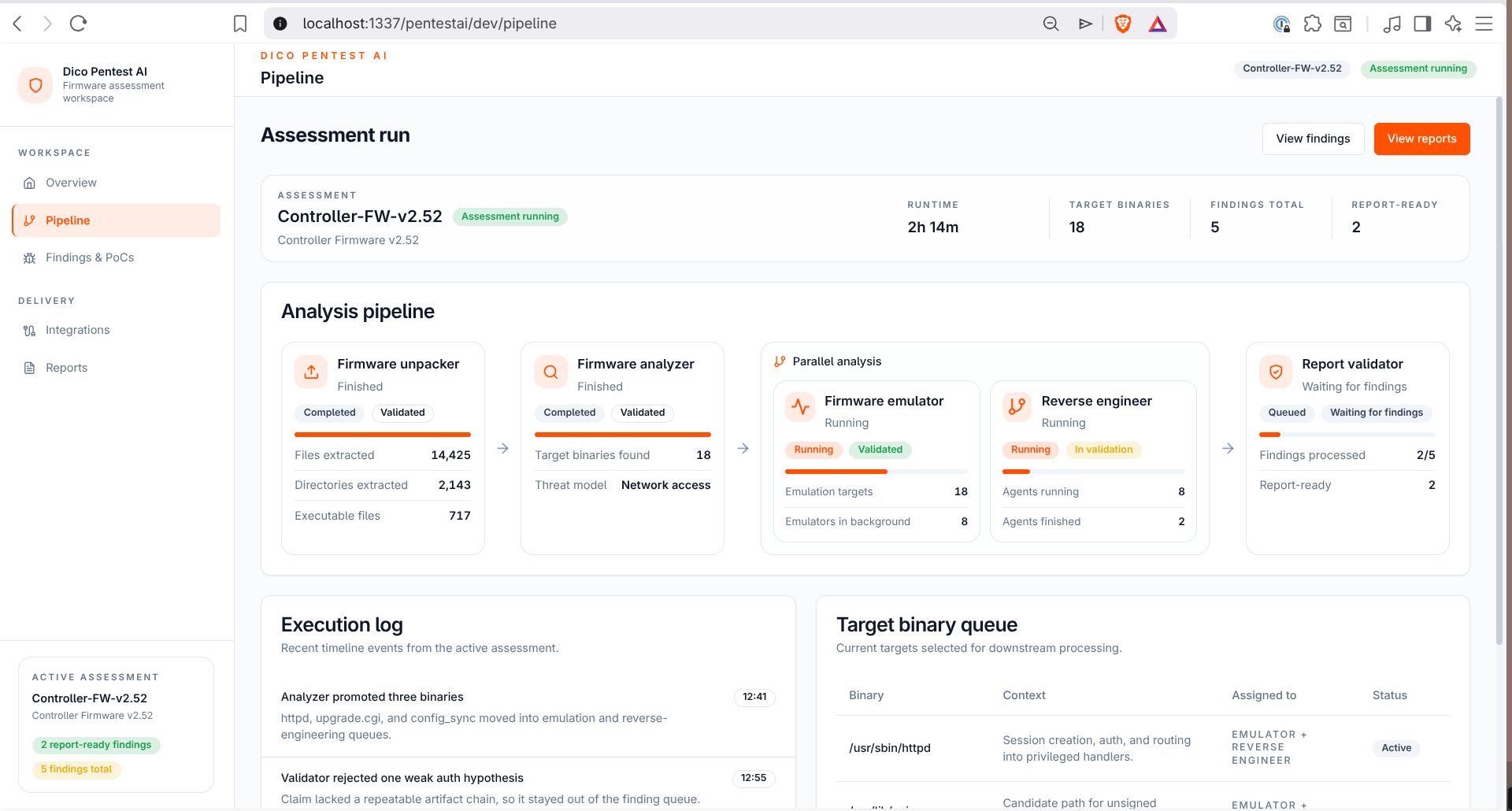
Bild2-Jul-01-2026-04-17-43-1893-PM

Validation of findings: Every identified vulnerability is subjected to automated validation checks before it is reported.

Proof-of-concept generation: Validated findings are delivered together with proof-of-concept evidence and supporting documentation.

Parallelized analysis: Multiple agents can operate simultaneously to expand coverage and reduce analysis time.
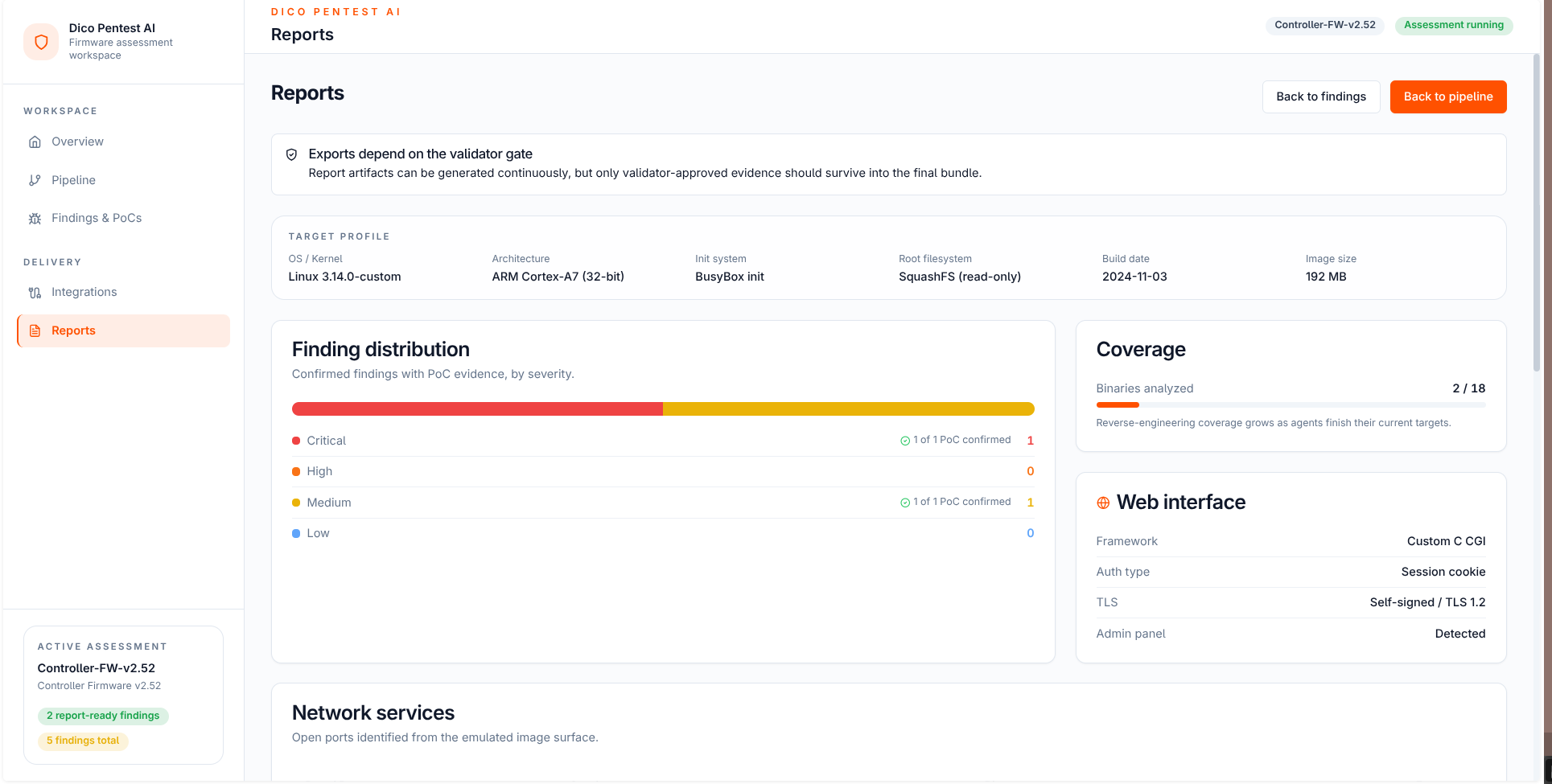
Bild3-4

Typical use cases for Entropy AI

Element 1@2x

Product security

Validate embedded software, applications and releases before deployment.

Element 2@2x

Automotive cybersecurity

Support software security assessments in complex software-defined vehicle environments.

Element 3@2x

Security engineering

Increase testing coverage while reducing manual verification effort.

Element 4@2x

Cloud and platform security

Analyze artifacts and software components before deployment into production environments.

Security teams need evidence, not assumptions

Unverified findings create additional workload for security and development teams. Every potential issue must be reviewed, reproduced and prioritized before remediation can begin.

Entropy AI incorporates a validation workflow into the analysis process. Findings are automatically checked before they reach the final report. Proof-of-concept generation provides additional evidence that supports prioritization and remediation decisions.

The outcome is a smaller set of findings with a higher level of confidence.

Built for engineering environments

Security testing only creates value when results can be integrated into existing delivery and governance processes.

Entropy AI supports:

  • Integration into CI/CD workflows.

  • Configurable analysis pipelines.

  • Addition or removal of agents depending on requirements.

  • Coordination of specialized analysis agents across the workflow.

The platform combines deterministic workflow execution with AI-driven orchestration where coordination between agents is required. 

Organizations adopt Entropy AI when they need to

Increase testing capacity without increasing review effort:
  • Reduce manual analysis effort

  • Accelerate security validation

  • Extend testing coverage

  • Operate with limited specialist resources

  • Scale security testing across multiple products and releases

The platform works with available artifacts, does not require source code and validates findings before reporting them. This helps teams focus remediation work on confirmed issues rather than investigating large numbers of potential findings.

experts in interaction 8-1-1-1

Why Diconium?

Diconium is a global tech company and end-to-end partner for building, running, and scaling intelligence across the entire value chain.

From first customer interaction to the product itself, we connect software, data, and AI into solutions that perform in real business environments. With responsibility for results. And the human expertise to make them work.

As part of the Volkswagen Group, we operate in large-scale, global environments across some of the most complex and demanding industries — automotive, industrial, and beyond.

Everything we do is focused on making businesses intelligent.

Page 1 -  Poduct 1_ AI Visibility Audit

See Entropy AI in action  

Whether you are assessing product security processes, scaling software security testing or evaluating options for automated pentesting, we can show how Entropy AI supports existing engineering workflows.

Request a demo

Saul Dickinson

Senior director cybersecurity

Saul+Dickinson


FAQ

What is automated pentesting?

Automated pentesting uses software-driven testing workflows to identify and validate vulnerabilities in applications, systems or software artifacts. Entropy AI combines automated analysis with validation workflows and proof-of-concept generation.

How does automated pentesting differ from traditional pentesting?

Traditional pentests rely heavily on manual analysis and a defined assessment period. Entropy AI automates large parts of analysis and validation while allowing testing to run at scale.

Can Entropy AI work without source code?

Yes. The platform is designed to analyze available artifacts and supports reverse engineering workflows that do not require source code access. 

Does Entropy AI require a live target environment?

No. The platform supports target emulation and can perform analysis without requiring access to a live target.

How are false positives reduced?

Findings undergo automated validation before being reported. The platform also generates proof-of-concept evidence for validated vulnerabilities.

Who is Entropy AI designed for?

The platform is relevant for product security teams, cybersecurity engineering teams, automotive cybersecurity organizations and security leaders responsible for software assurance and vulnerability management.