

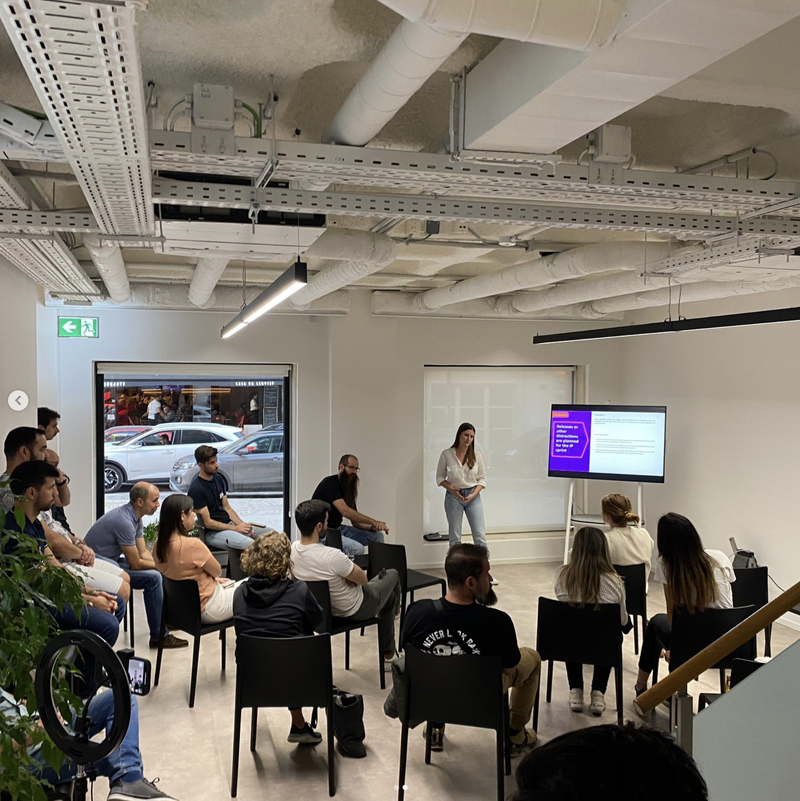

Contextual & Composable Commerce

Smoother experience and higher conversions through contextual or composable commerce solutions.

We help businesses build flexible online commerce solutions with a modular setup. 
This approach makes it possible to design shopping experiences that fit your specific needs - leading to smoother customer experiences and higher sales. 

We support you in choosing the right setup and architecture pattern that matches your business requirements - from consulting to implementation. 

CONTEXTUAL COMMERCE

refers to the practice of delivering personalized and relevant shopping experiences to customers based on their current context, such as their browsing behavior, location, time of day, and other real-time data. The goal is to seamlessly integrate the shopping experience into the customer's everyday activities, making it more convenient and engaging.

Composable Commerce

is an approach to building and managing digital commerce platforms using modular, interchangeable components. This method allows businesses to select and integrate best-of-breed solutions for various aspects of their commerce operations, such as product management, checkout, payment processing, and customer experience.


Benefits of CONTEXTUAL COMMERCE

  • Enhanced Customer Experience: By delivering relevant and personalized experiences, customers are more likely to feel understood and valued.
  • Increased Engagement: Contextual commerce can lead to higher engagement rates as customers are presented with products and offers that match their current needs and interests.
  • Higher Conversion Rates: Personalized and timely offers can drive higher conversion rates and sales.
  • Customer Loyalty: Providing a seamless and convenient shopping experience can foster customer loyalty and repeat business.

Benefits of Composable Commerce

  • Agility: Quickly adapt to changing market demands and customer preferences by easily reconfiguring and updating individual components.
  • Innovation: Foster innovation by experimenting with new components and technologies without disrupting the entire system.
  • Cost Efficiency: Reduce costs by only implementing the components you need, avoiding unnecessary features and functionalities.
  • Improved Customer Experience: Deliver a more engaging and relevant shopping experience by using real-time data to tailor content and offers.
  • Resilience: Increase system resilience by isolating issues to specific components, minimizing the impact on the overall platform.
Contextual and composable commerce solve different problems: contextual focuses on delivering highly relevant content to users, while composable focuses on giving businesses flexibility with platforms made of replaceable ‘packaged business capabilities. Neither is a one-size-fits-all solution. In fact, contextual commerce can also be achieved without a composable setup - even with a traditional monolith by integrating recommendation engines.
Bernd_Burkert

Bernd Burkert

Senior Digital Consultant Commerce / Diconium

How we approach implementing a composable commerce architecture

In our agile diconium project approach, we work through defined phases to create a clear target picture together with you. We outline the necessary steps to realize a successful and sustainable solution for your business. Each phase is supported by workshops and an adaptive working model that keeps us aligned with the project goals. Our typical project phases include scoping, concept, implementation, and improvement.

01

Alignment

Ensure strong executive alignment and create a common product vision to secure necessary resources and communicate the project's strategic importance.

02

Discovery 

Understand current systems, business needs, and future goals, and select the right migration approach. 

03

Validation

Define a POC to validate the chosen eCommerce solution and mitigate risks.

04

Make or buy 

Clearly define what to build internally versus what to buy to focus on areas that provide the most business value.

05

Business Case

Map technology to business value to ensure technology investments align with business objectives and demonstrate ROI.

06

Ownership

Establish product ownership to drive delivery across the organization and maintain decision-making in-house. 

DICONIUM_120924_AFTERNOON_1913

WHY DICONIUM?

Since day one we have gained extensive experience and expertise for over 30 years from numerous projects in which we have built commerce solutions for leading industry clients successfully at global scale. For our customers we enable a seamless digital experience fueled by state-of-the-art technology mapping to their system landscape. Customers benefit from our strong partnership network (e.g. Salesforce, Commercetools)  

4a23cae8129e88200b8c66112958d9b6-1 4a23cae8129e88200b8c66112958d9b6-1

Our Partnerships

salesforce-2

From crafting and executing SAP strategies to guiding design, integration, and SAP system operations, we provide the support needed to achieve impactful results with SAP Customer Experience (CX) solutions and diconium's consulting services.
commercetools-logo

From defining future-proof commerce strategies to implementing, integrating, and continuously optimizing your e-commerce landscape, diconium and commercetools combine composable technology with deep consulting expertise to deliver scalable, high-performance customer experiences across all channels.

OUR EXPERTS

Bernd+Burkert

Bernd Burkert

senior digital consultant commerce

Burkhard+Richter

Burkhard Richter

director digital consulting

READY TO UPDATE YOUR BUSINESS?

Let's Talk!

FAQ


How do I know if composable commerce makes sense for my digital business?

Evaluating composable commerce involves assessing several factors: If your business requires high flexibility to adapt quickly to market changes and customer demands, it can be beneficial. It is ideal for businesses looking to scale efficiently without being constrained by monolithic systems. Composable commerce offers the modularity needed to create unique customer experiences and tailor functionalities to specific business needs.  
Assess if your current systems can integrate seamlessly with composable solutions for a smooth transition. Ensure you have the necessary resources, including skilled personnel and budget, to implement and manage a composable architecture. All these aspects can be evaluated in a series of workshops in order to find a commerce architecture that matches your tech stack and your organizational set up. 

What is the difference between MACH and composable commerce approach?

Both approaches focus on modularity, scalability and flexibility, but while MACH lays the technical foundations, composable commerce goes one step further in the direction of individualization and agility. MACH provides a robust foundation with clearly defined interfaces and services, while Composable Commerce offers the ability to combine and customize these services to meet specific business purposes.

What is the difference between composable commerce and headless?

Headless technology decouples the frontend presentation layer from the backend commerce functionality, allowing for more flexibility and customization in how the user interface is created and managed. A composable commerce solution takes a step beyond headless by breaking down the entire commerce stack into modular components that can be assembled and reassembled like building blocks, enabling all the benefits of headless technology but with even greater agility, stability and scalability in creating tailored eCommerce solutions.

What are the benefits of composable commerce compared to a monolith solution?

If all the functions and components of the online store are integrated into a single software solution, adjustments, changes and extensions to the store system become difficult and time-consuming. Monoliths are seen as an obstacle to growth and flexibility, which is reflected in high maintenance and servicing costs. 

In the composable commerce approach the entire commerce environment is broken down into modular components. These individual building blocks can be flexibly combined and exchanged to create customized solutions for individual business requirements. The advantages of these combinable, replaceable components lie in the added agility, stability and scalability - and they complement the benefits of the MACH principles perfectly. Companies can tailor their entire system architecture precisely to their needs and react quickly to changes. New implementations can be realized by replacing the relevant module without affecting the entire system.